

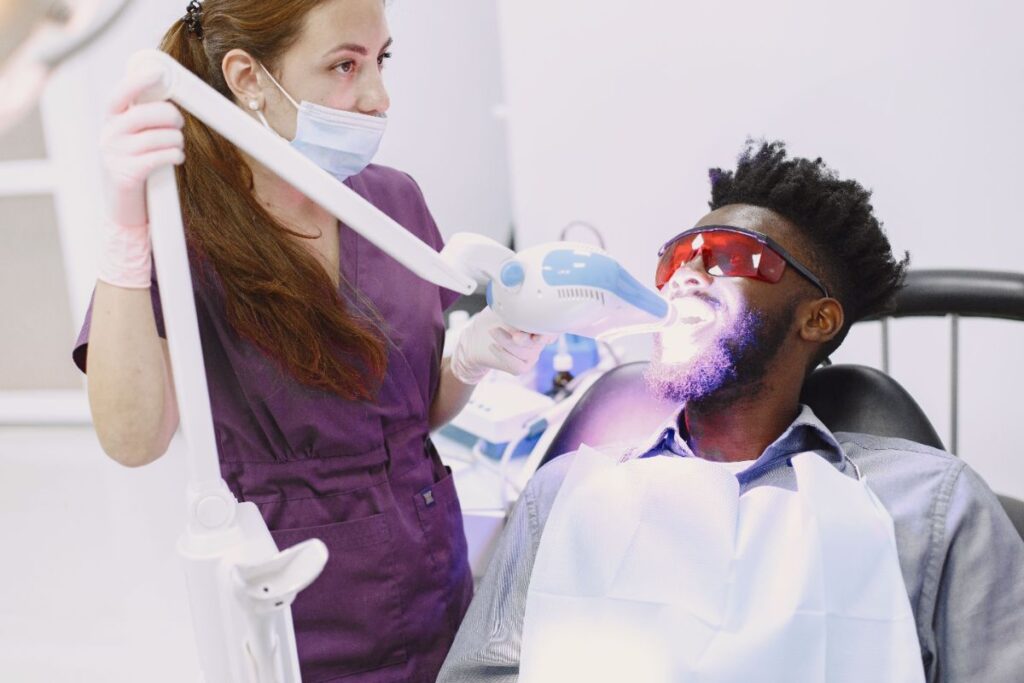
“Teeth whitening” and “Hollywood Smile” get used interchangeably in a lot of dental tourism marketing, but they’re not the same treatment, and mixing them up is how patients end up disappointed. Whitening works on your own enamel — it doesn’t reshape teeth, close gaps, or fix chips, and it does nothing at all to porcelain veneers or crowns you already have. If what you actually want is a completely uniform, camera-ready smile, you’re looking at veneers, not whitening. But if your teeth are healthy and just duller than you’d like, whitening is faster, reversible, and a realistic one- or two-day treatment to plan around a trip to Istanbul. Here’s how it actually works, what determines the result, and where it falls short.
What Happens During an In-Office Session
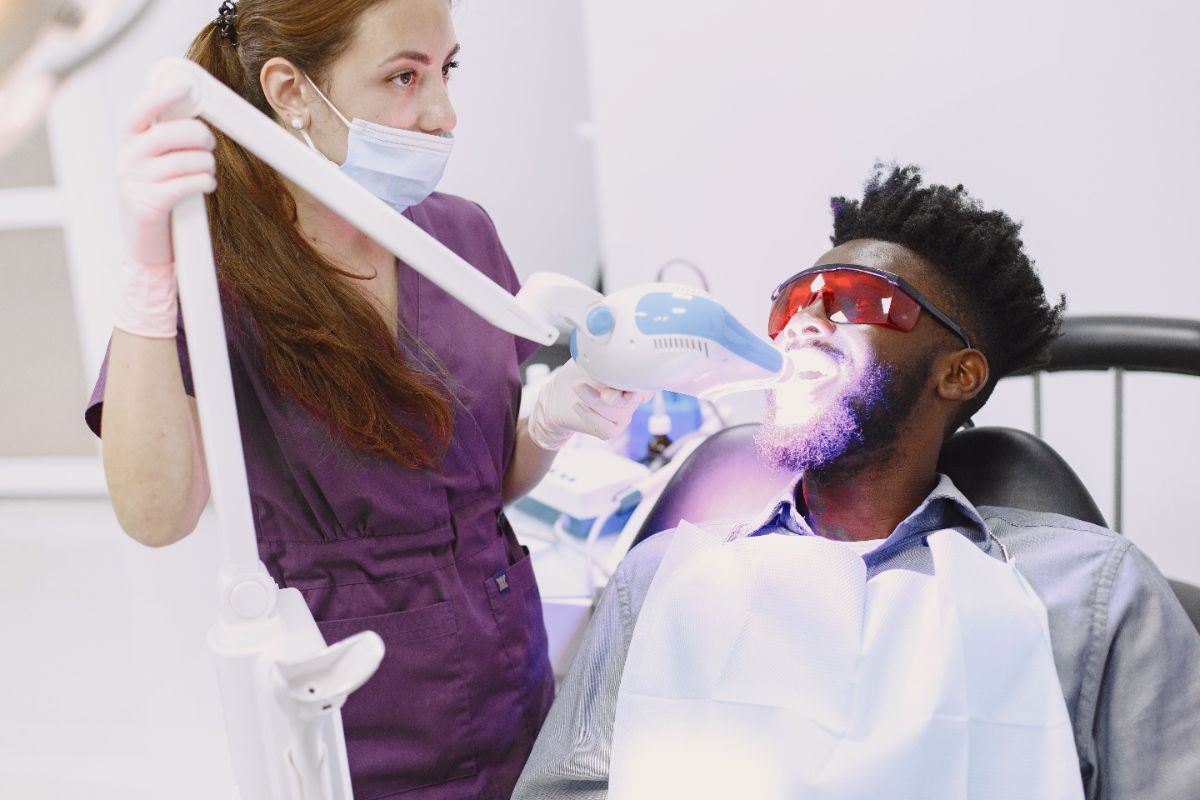
In-office whitening uses a stronger gel than anything sold over the counter — typically 25% to 40% hydrogen peroxide, applied directly to the teeth after your gums are isolated with a protective barrier. The dentist applies the gel in cycles, usually three rounds of 15 to 20 minutes each, sometimes with a light or laser used to activate the gel faster (the evidence on how much the light actually speeds things up is mixed, so don’t assume a clinic advertising “laser whitening” gets you a meaningfully whiter result than one without it). A full session runs 60 to 90 minutes, and most patients see a shift of three to eight shades on a standard shade guide, visible immediately.
In-Office or Take-Home Trays
Clinics in Istanbul typically offer both, and the honest answer is that neither is strictly better — they solve different problems. In-office gets you a finished result in a single appointment, which is what most patients flying in for a short trip actually need. Take-home trays, custom-molded to your teeth at the same visit, use a lower-concentration gel (10% to 20% carbamide peroxide) worn for one to a few hours a day over one to two weeks; the change is more gradual but tends to be gentler on sensitive teeth, and the trays travel home with you if you want to keep topping up the result later. Some clinics combine both: an in-office session to jump-start the color, then trays to maintain it.
Fitting It Around a Short Trip
Whitening is one of the easiest treatments to combine with a longer trip built around something else — a lot of patients add it onto the tail end of a veneer or implant consultation, or treat it as a two-day add-on around seeing Istanbul. Because the entire treatment can be finished in a single appointment, you don’t need to build extra recovery days into your schedule the way you would for a surgical treatment.
Why It Doesn’t Work on Everyone
Whitening only lightens natural enamel. If you have crowns, veneers, or bonding on your front teeth, those pieces stay exactly the color they were made — which can leave you with a visible mismatch if the surrounding natural teeth whiten and the restorations don’t. If your discoloration comes from something inside the tooth rather than surface staining — old antibiotic exposure is the classic example — standard bleaching gel often can’t reach it, and internal bleaching or veneers become the more realistic option. Any active decay or exposed root surfaces should also be treated first; whitening gel on compromised tooth structure is uncomfortable at best.
Sensitivity Is Normal, Usually Short
Some tooth sensitivity for 24 to 48 hours afterward is common, especially at in-office concentrations. Clinics typically apply a desensitizing gel, potassium nitrate or fluoride-based, at the end of the session, and the advice afterward is the same one you’d get anywhere: skip very hot or very cold food and drinks for the rest of that day. If you already deal with sensitive teeth, say so before you book — a lower-concentration take-home protocol is usually the more comfortable route.
How Long the Result Actually Lasts
This varies more than most whitening pages admit. Coffee, tea, red wine, and smoking all bring the color back faster; without those habits, results commonly hold for one to two years, sometimes longer. With them, you might notice fading within six months. A touch-up kit — trays you already own, used for a few nights every few months — is the realistic way to maintain the shade, rather than expecting one session to last indefinitely.
What’s Worth Checking Before You Book
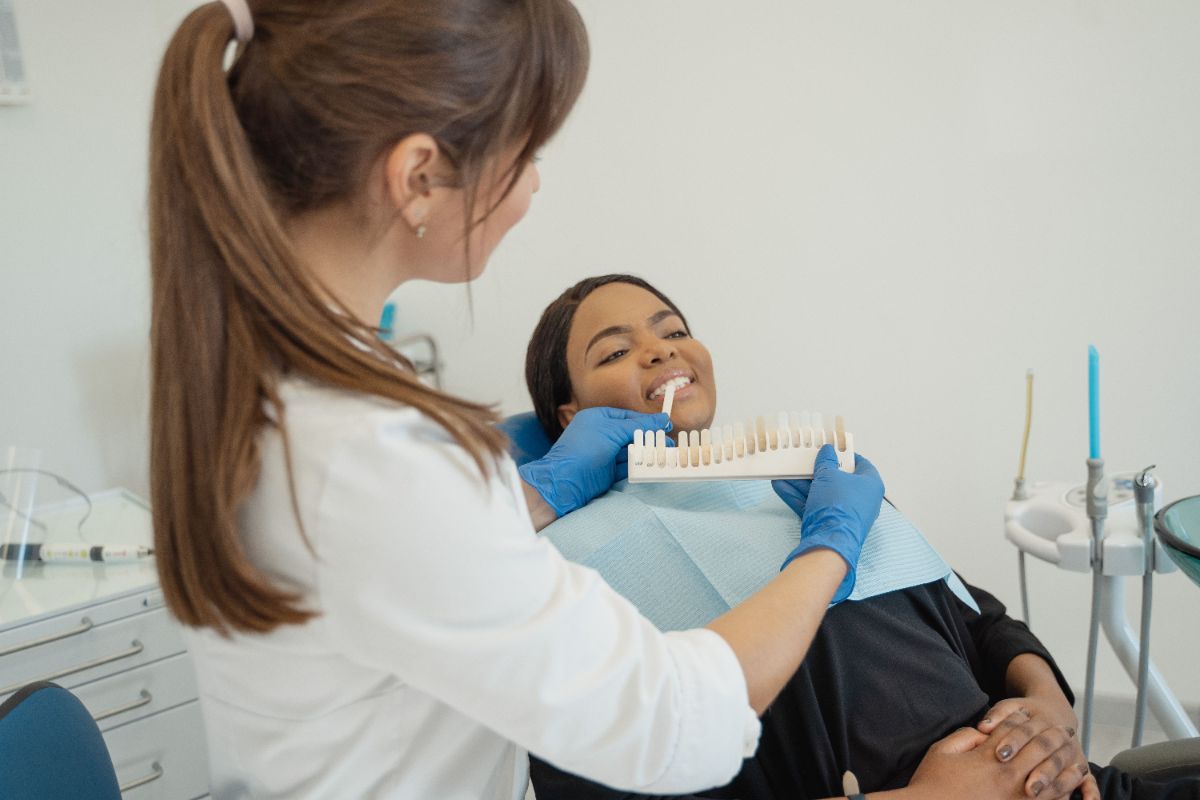
A few questions are worth asking before you commit to a clinic: do they do a cleaning first (surface plaque and tartar can make results look uneven), do they take a shade reading and photos before and after so you can actually see the change, and what gel brand and concentration are they using. If veneers are ever a possibility for you down the line, it’s worth understanding how a Hollywood Smile is actually planned before deciding which treatment solves your goal — whitening and veneers aim at two different problems.
Get a Straight Answer for Your Case
Whitening is one of the few dental treatments where the honest recommendation is sometimes “you don’t need this yet,” or “this won’t get you what you’re picturing.” Send us a photo of your smile through WhatsApp, call us, or book a consultation, and we’ll tell you plainly whether whitening will do what you want — or whether you’re actually looking for veneers — along with a personal, itemized quote either way.
Frequently Asked Questions
Can I get a cleaning and whitening in the same visit?
Yes, and it’s usually recommended — plaque and surface stains can make the whitening result look patchy. Most clinics build a cleaning into the same appointment or the day before.
Does whitening damage enamel?
Not when it’s done at a clinical concentration by a professional with your gums properly isolated. The sensitivity you might feel is temporary and related to the tooth’s nerve, not enamel damage. Home-bought whitening strips used incorrectly or too often are a different story.
How white is too white?
A shade guide gives you a reference point, but natural-looking white and obviously bleached white are both achievable results — it’s worth telling your dentist which one you want before the first gel cycle, not after.
