

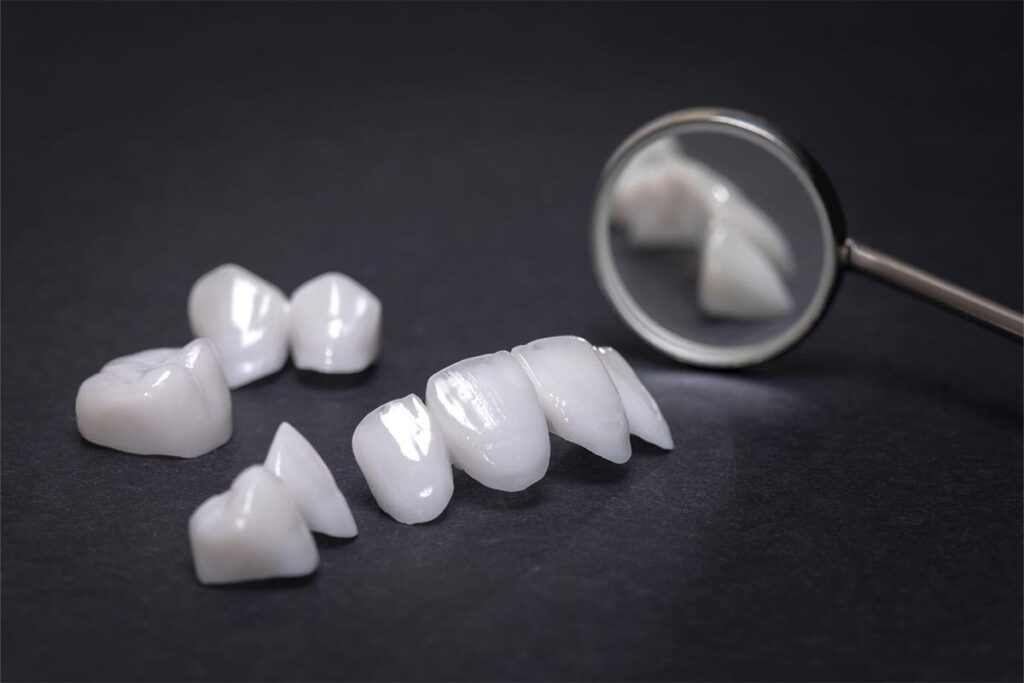
“Veneers” gets used as if it’s one single thing, but the term actually covers several different materials, levels of commitment, and treatment timelines. Before you book anything, it helps to know what you’re choosing between — the material, how much of the tooth gets reshaped, how long it realistically holds up, and what a normal treatment timeline looks like in Istanbul. This guide walks through all of it in plain terms, without getting into cost, so you can go into a consultation asking the right questions.
Quick answer: Dental veneers are thin shells — usually porcelain, lithium disilicate (E-max), zirconia, or composite resin — bonded to the front of a tooth to change its shape, color, or alignment. Most ceramic veneers last 10 to 20 years with normal care, require a small and permanent amount of enamel reshaping, and take two visits over roughly a week for a standard case.
What Are Dental Veneers?
A veneer is a thin shell, usually between 0.3mm and 0.7mm thick, bonded over the visible front surface of a tooth. Unlike a crown, which wraps around the entire tooth, a veneer only covers what shows when you smile — so it changes the shape, length, color, or minor position of a tooth without rebuilding it from every angle. Veneers are most often placed on the upper front six to ten teeth, where they have the biggest visual effect on a smile.
What Types of Dental Veneers Are There?
The material matters more than most people expect, since it decides how long the veneer lasts and how natural it looks up close. The four you’ll come across most often:
| Type | Material | Best For | Typical Lifespan |
|---|---|---|---|
| Feldspathic porcelain | Hand-layered ceramic | Maximum natural translucency, minimal prep | 10–15 years |
| E-max (lithium disilicate) | Pressed or milled glass-ceramic | Front teeth — the best balance of strength and natural light reflection | 12–20 years |
| Zirconia | Milled ceramic, higher strength | A heavier bite, back teeth, patients who grind | 15–20+ years |
| Composite resin | Direct or lab-made resin | A reversible trial, minor chips, tighter budgets | 4–8 years |
Most digital smile design plans use E-max or feldspathic porcelain on the teeth that show most, and reserve zirconia for a heavier bite further back. We’ve covered how E-max specifically holds up in this guide to E-max veneer longevity if you want the deeper comparison against zirconia.
Am I a Good Candidate for Veneers?
Veneers work best when the underlying teeth are structurally healthy and the concern is mostly cosmetic. Good candidates typically have:
- Healthy gums and no active decay on the teeth being treated
- Enough enamel left to bond to — heavily filled or root-canaled teeth may need a crown instead
- Cosmetic concerns such as discoloration, chips, gaps, or minor shape issues, rather than a bite problem
- Realistic expectations about how much a veneer can change tooth position — it’s not a substitute for orthodontics on a significantly crooked tooth
Veneers usually aren’t the first recommendation for people with untreated gum disease, severe misalignment, or heavy, unprotected teeth grinding — those get addressed first, sometimes with a night guard added alongside the veneers rather than instead of them.
How Does the Veneer Procedure Work?
A standard veneer case, without implants or other work involved, follows the same basic sequence almost everywhere — what changes between clinics is how much of it happens digitally before your tooth is ever touched.
- Consultation and digital smile design. Photos, a shade check, and a mock-up you approve before any preparation starts.
- Enamel preparation. A thin, controlled layer — typically 0.3–0.5mm per tooth — is reshaped to make room for the veneer.
- Temporary veneers. Fitted the same day while your final restorations are milled or hand-layered in the lab.
- Fit and bite check. Once the lab work is back, the permanent veneers are tried in, checked against your bite, and adjusted before bonding.
- Bonding and polish. The veneers are cemented in place, with any final shaping or polishing done chairside.
For patients traveling to Istanbul, that usually means two clinic visits across 5 to 7 days — the first for design and preparation, the second, once the lab has finished, for fitting and bonding.
How Long Do Veneers Last?
Most ceramic veneers — feldspathic, E-max, or zirconia — hold up for 10 to 20 years with normal care, and clinical follow-up studies on ceramic veneers report survival rates well above 90% at the 10-year mark. Composite veneers have a shorter lifespan, typically 4 to 8 years, since the resin wears and stains faster than ceramic. In either case, longevity comes down to your bite force, whether you grind or clench at night, and habits like not using your front teeth as tools.
Do Veneers Damage or Weaken Your Natural Teeth?
Traditional ceramic veneers require removing a small, permanent amount of enamel — usually well under half a millimeter — so the process is not reversible. That said, when the prep is conservative and limited to enamel rather than cutting into dentin, the tooth underneath stays structurally sound; you’re making room on the tooth’s surface rather than weakening it. Composite veneers and some minimal-prep or no-prep porcelain veneers can be applied with little to no enamel removal, which is worth asking about if reversibility matters to you.
What’s the Difference Between Veneers, Crowns, and Bonding?
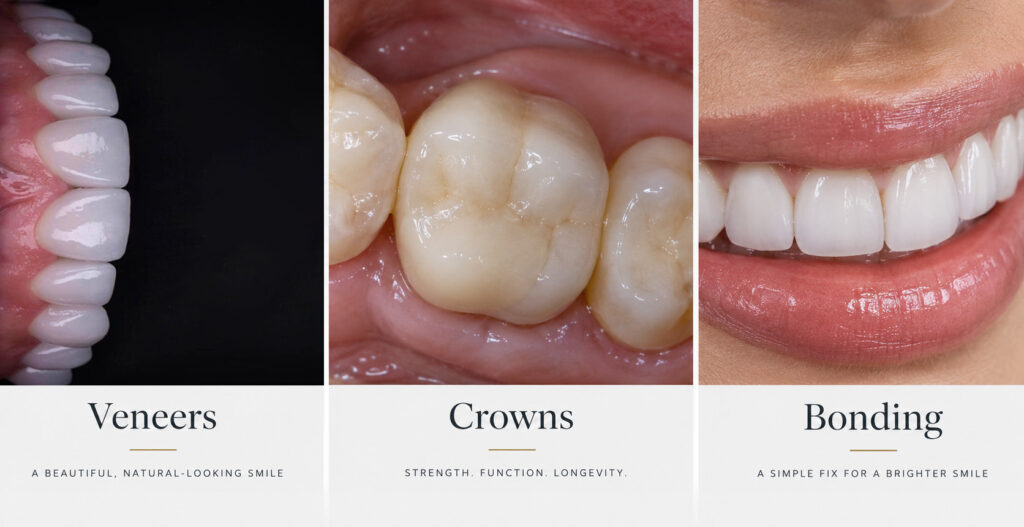
These three get confused constantly, and the difference comes down to how much of the tooth is covered and how it’s applied:
- Veneers cover only the front surface of the tooth and are lab-made, then bonded on — best for cosmetic changes to otherwise healthy teeth.
- Crowns cover the entire tooth, 360 degrees, and are used when a tooth has lost significant structure to decay, a root canal, or a large old filling.
- Bonding is composite resin sculpted directly onto the tooth in one visit, without a lab — faster and more affordable up front, but less durable and more prone to staining than a veneer.
A “Hollywood Smile” isn’t a separate material — it’s a full upper, and often lower, arch treated with veneers or crowns as one coordinated design, which is why it’s usually planned as its own project rather than a single veneer case.
How Do You Care for Veneers After Treatment?
Veneers don’t need special products, but a few habits make a real difference to how long they last:
- Brush and floss normally — veneers don’t decay, but the tooth margin underneath still can
- Avoid using front teeth to open packaging, bite nails, or chew ice
- Wear a night guard if you grind or clench, especially with E-max or feldspathic porcelain
- Go easy on staining drinks like coffee, tea, or red wine in the first 24–48 hours after bonding, when the surface is most porous
- Keep up with regular dental check-ups so a dentist can catch any margin or bonding issues early
Frequently Asked Questions
Are veneers permanent, or can they be removed?
Traditional ceramic veneers are considered permanent because a layer of enamel is removed to fit them — once that’s done, the tooth needs some form of veneer or crown going forward. Composite veneers and true no-prep veneers are closer to reversible, since little or no enamel is removed to place them.
Can you whiten veneers once they’re placed?
No — veneers don’t respond to whitening the way natural enamel does. This is why most dentists recommend whitening your natural teeth to your target shade first, then matching the veneer shade to that, rather than whitening afterward and ending up with a mismatch.
What’s the difference between veneers and a “Hollywood Smile”?
A Hollywood Smile isn’t a different material — it’s a full-arch smile makeover, usually 16 to 20 veneers or crowns across the upper and sometimes lower teeth, planned as one design rather than a single tooth or a few. If you’re weighing a full smile makeover against treating just a few teeth, our Hollywood Smile guide covers what that broader treatment actually involves.
How many trips to Istanbul does a veneer treatment take?
Two visits across roughly 5 to 7 days for a standard veneer case with no other treatment involved. If veneers are combined with implants, gum treatment, or more extensive restorative work, plan on additional days or a second trip.
Will veneers look natural, or obviously “done”?
That depends far more on planning than on the material. A digital smile design mock-up, a shade chosen against your skin tone and natural teeth rather than a generic bright white, and a dentist who varies translucency tooth-to-tooth are what make veneers read as a healthy natural smile instead of a visibly artificial one.
At Uzmanlar Dental Clinic in Beşiktaş, every veneer case starts with a digital design you can see and approve before a single tooth is touched, and the material — E-max, zirconia, feldspathic porcelain, or a mix — is chosen around your bite and how much of your smile shows, not a one-size package. If you’d like to know which approach fits your teeth, send our team a few photos and we’ll talk you through it — message us on WhatsApp, call +90 542 227 16 82, or book a consultation to get started.
